
Smith County Warrant Source Finding
The Smith County Sheriff's Department has no public most wanted page. There is no warrant search portal, wanted-photo gallery, or booking app. No reward amounts, tip policies, or lists of wanted names have been released either. Do not fill that gap with a copied list from a third-party site. Those listings are often stale or wrong. Only the responsible government office can confirm a current warrant.
Two official resources anchor the right contact information. The CTAS profile for Sheriff Steve Hopper names the sheriff and gives the department's details. The TBI SAMSTrack agency directory lists the Smith County Sheriff's Department among Tennessee agencies. Neither one is a wanted-person database. Their purpose is to point you to the agency itself, the correct first step when no public list exists. The official CTAS sheriff profile is the verified place to confirm how to reach the office.
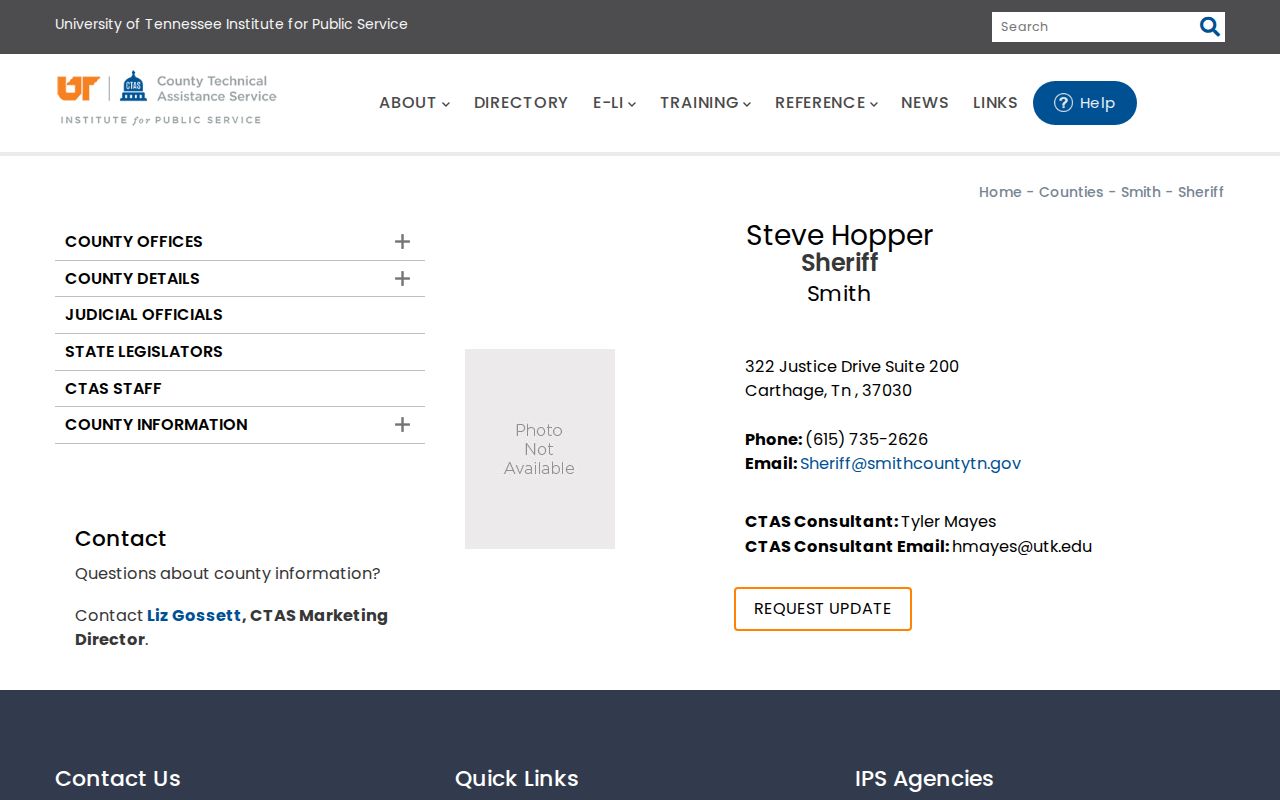
Think of that profile as a phone book entry, nothing more. It is not a gallery of wanted photos. It is not a warrant result.
If the sheriff later issues a wanted notice, it will describe a charge and request public help. It would come from the sheriff, a court, or another authorized office. Anything else is just an unverified repost. There is also no guarantee a new list will appear on any given day, that photos will be posted, or that tips will be accepted online. The lack of a public list means only one thing. No list has been published. It does not mean warrants are absent in Smith County.
What a Verified Warrant Record Establishes
With no public list to browse, the question narrows. What can the responsible office confirm about one record? A clerk or sheriff contact can explain which office handles verification, what identity details they need, and what lawful step comes next. Never treat a name match as proof. Shared names, changed case statuses, sealed material, and slow docket updates all make informal searching unreliable.
| Verified item | What it can establish |
|---|---|
| Issuing court or agency | Which office is responsible for the record and can confirm its status. |
| Case or docket reference | A way to distinguish the matter from another person with a similar name. |
| Status at the time checked | Whether the responsible office can confirm a warrant-related status at that moment. |
| Identity requirements | What information the office needs before discussing a specific person’s record. |
| Official instructions | Where to direct a legal or procedural question without relying on a third-party claim. |
Verification answers one question only. It does not turn a booking, a news story, or an old record into proof of an active warrant. If your question concerns a specific person, follow the responsible office's instructions rather than investigating on your own or spreading a name around.
The scope of an answer varies too. A sheriff's office may send you to a clerk. The clerk may explain the court-record route without settling a law-enforcement question. Ask which office holds the record, whether it sits with the court or the agency, and what identifier will prevent a mistaken match. A docket search works well with a case number, but it cannot replace a direct check of current warrant status.
Check a Smith County Warrant Safely
Want to check for a Smith County warrant the safe way? Call first. The Circuit Court Clerk keeps case files for the circuit side, while the General Sessions Court handles its own docket, so either office can tell you what exists under a name. Staff answer questions by phone during business hours. If your situation needs a formal records request instead, the county’s Open Records Policy spells out the steps in writing. Neither office runs an online warrant list, so expect the process to work through direct contact rather than a search box.
- Call the Smith County Sheriff’s Department at (615) 735-2626 and ask which office can verify the particular warrant question.
- Call the Circuit or General Sessions clerk at (615) 735-0500 to ask about the related court record, docket, or case status.
- Provide only the identifying information the responsible office requests. Do not treat a web name match as confirmation.
- If an individual may need to appear, that individual should speak with counsel before appearing and follow the court or law-enforcement instructions received.
- For an immediate safety emergency, call 911. Do not use a records inquiry as an emergency response.
For questions about a past booking rather than an active warrant, the official-record routes for Smith County explain how to request a booking record. Keep the request narrow. Give a person's name and a date range. Let the county pull from its own systems rather than asking staff to build a new list.
Note: A phone call can identify the right office, while a written request may be required for a copy of a public record.
Smith County Warrant and Booking Differences
Warrants and booking records answer different questions. One shows a court's demand. The other documents an arrest event. A name missing from a public roster proves nothing, especially since no official Smith County roster exists. A booking can also happen for reasons unrelated to a warrant. The person may be released quickly. The booking record still stays in the normal records process afterward.
| Record type | What it concerns | What it does not prove |
|---|---|---|
| Warrant | A court or authorized process directing a law-enforcement action. | Guilt, the final court outcome, or a current public wanted listing. |
| Booking record | Processing after an arrest or other entry into the local custody system. | An active warrant, continued custody, or a conviction. |
| Court docket | Events and filings in a case. | A complete real-time account or final disposition in every matter. |
| TDOC FOIL result | State felony custody or supervision information when a person is within that system. | A current Smith County jail booking or local warrant status. |
Tennessee sets uniform booking standards statewide. The rule is Tenn. Code Ann. § 8-4-115, covering photographs, fingerprints, arrest reports, and warrant or capias paperwork. That law does not force Smith County to post any of it online. A mugshot can sit in a county file forever without becoming a public web listing. So absence from a search means little.
Timing trips people up too. Someone may have an active court case yet no booking record a web search can find. A booking entry can linger after release. The case keeps moving on its own schedule. A later state corrections result reflects custody or supervision at the state level, not the original county booking. Keep the record type and its date straight. Separate events then stay separate.
Smith County Warrant Contacts
Justice Drive is where the local pieces sit closest together. The sheriff's office comes first for warrant verification. The court clerk handles the court-record side. Neither role substitutes for the other. No published reward, anonymous tip line, or Crime Stoppers procedure for Smith County could be confirmed, so none appears here.
Steve Hopper
322 Justice Drive, Suite 200
Carthage, TN 37030
(615) 735-2626
322 Justice Drive, Suite 115
Carthage, TN 37030
(615) 735-0500
Weekdays, 8 a.m. to 4 p.m.
One timing note. The posted weekday hours belong to the clerk's office, not the sheriff. For the sheriff, ask the department directly how it prefers records requests. When routing is unclear, the county policy names the Mayor's Office as a coordinator. That office can pass a public-record request to the right custodian.
For case results, the clerk can point you to the correct court record. The county's official online docket folder helps. Its entries can be preliminary, sealed, delayed, or simply incomplete. Match the case number, court date, and identity before treating any docket entry as the final word.
Smith County Warrant Cases Need Disposition
A warrant or booking starts a case. It rarely ends one. General Sessions handles criminal matters within its jurisdiction, including felony preliminary hearings, and other matters move further along the court process. The clerk's record is the local place to follow up, while the TBI dispositions and expungements resource explains outcomes like dismissal, diversion, acquittal, and conviction.
Jurisdiction explains a lot of the confusion. Smith County General Sessions covers offenses carrying up to 11 months and 29 days, while felony matters may get a preliminary hearing there or move to the grand jury. That is why one early event can produce very different court records later. An early docket entry is not a case's conclusion. When the procedural path is unclear, ask the clerk which court holds the later file. Final records may also be sealed, expunged, or restricted from public view.
State custody is a separate system. Tennessee's Felony Offender Information Lookup can matter once a state sentence or supervision begins. It is not a Smith County warrant search, though, and it cannot replace verification through the sheriff or clerk.
Safety Around Wanted Notices
Smith County publishes no verified wanted-photo list, reward policy, or tip procedure that the public can check. So treat an old post, news photo, or third-party page with real caution. It is not a current official notice. Only the responsible agency can judge identity and status. An immediate risk calls for an emergency response, never independent action.
Photos, names, and social posts get misidentified, go stale, or lose their context. Smith County has no verified public wanted-photo list. So a third-party image or old news item should never be read as a live law-enforcement notice. Leave the identity and status determination to the agency responsible.
You may be the person named in a warrant. Take a calmer route. Lawful verification first, then advice from counsel, before you appear anywhere. That protects your safety. It also keeps the record question apart from everything else.
Public Record Search
Sponsored Results